
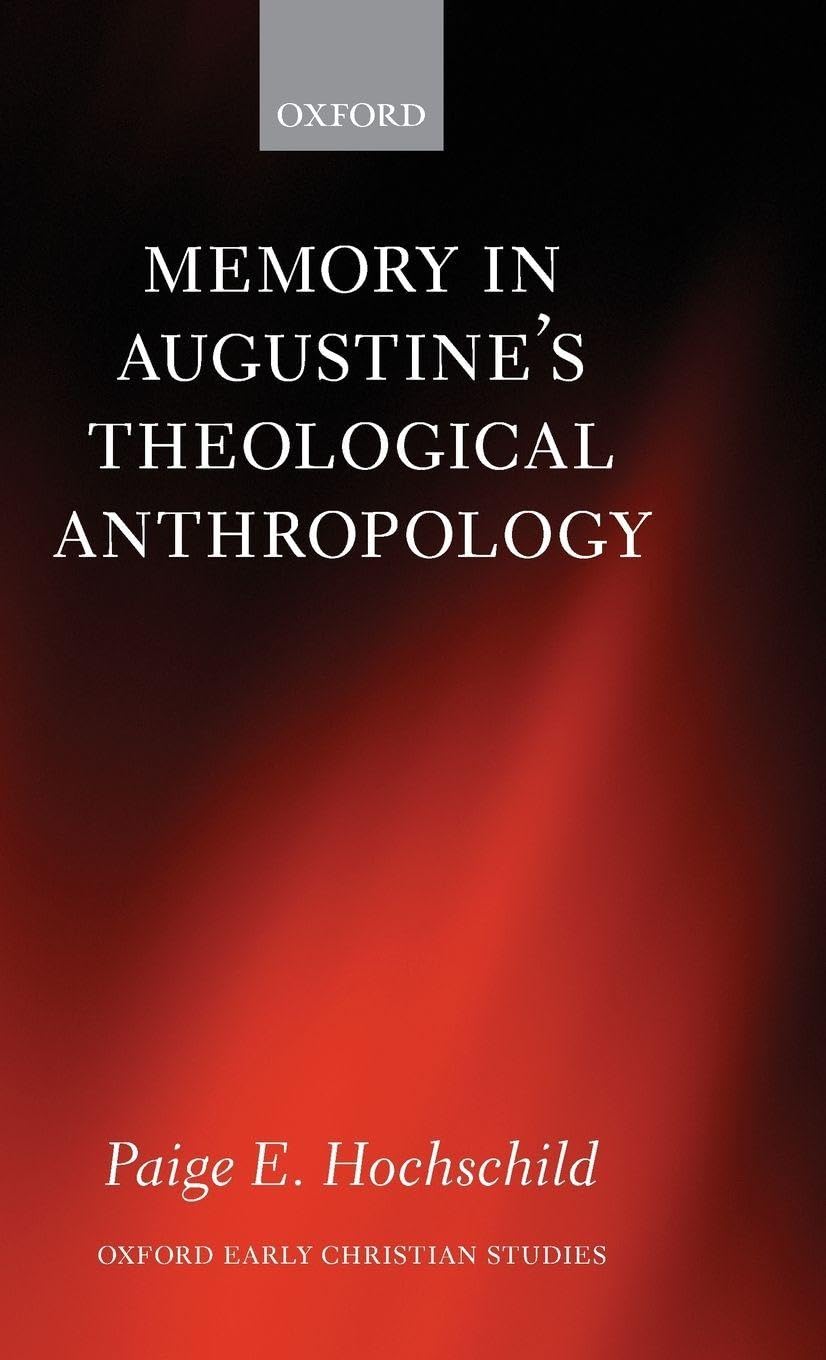
Memory in Augustine's Theological Anthropology (Oxford Early Christian Studies)
Product details
| Management number | 233721360 | Release Date | 2026/06/27 | List Price | US$69.33 | Model Number | 233721360 | ||
|---|---|---|---|---|---|---|---|---|---|
| Category | |||||||||
Memory is the least studied dimension of Augustine's psychological trinity of memory-intellect-will. This book explores the theme of 'memory' in Augustine's works, tracing its philosophical and theological significance. The first part explores the philosophical history of memory in Plato, Aristotle, and Plotinus. The second part shows how Augustine inherits this theme and treats it in his early writings. The third and final part seeks to show how Augustine's theological understanding of Christ draws on and resolves tensions in the theme of memory.The place of memory in the theological anthropology of Augustine has its roots in the Platonic epistemological tradition. Augustine actively engages with this tradition in his early writings in a manner that is both philosophically sophisticated and doctrinally consistent with his later, more overtly theological writings. From the Cassiacum dialogues through De musica, Augustine points to the central importance of memory: he examines the power of the soul as something that mediates sense perception and understanding, while explicitly deferring a more profound treatment of it until Confessions and De trinitate. In these two texts, memory is the foundation for the location of the Imago Dei in the mind. It becomes the basis for the spiritual experience of the embodied creature, and a source of the profound anxiety that results from the sensed opposition of human time and divine time (aeterna ratio). This tension is contained and resolved, to a limited extent, in Augustine's Christology, in the ability of a paradoxical incarnation to unify the temporal and the eternal (in Confessions 11 and 12), and the life of faith (scientia) with the promised contemplation of the divine (sapientia, in De trinitate 12-14). Read more
Bestseller ranking
Wheel Spacers


Customers who viewed this product also viewed
Medieval Thought


Correction of product information
If you notice any omissions or errors in the product information on this page, please use the correction request form below.
Correction Request Form